Brisk corridor lap (2–4 min)
Walk at a pace where speaking full sentences is easy but slightly energising. Research on light activity suggests regular walking breaks may support glucose regulation after meals when done at conversational intensity.

Plain how-to notes for moves we use — and what people often notice when they do them.
Ideal between video calls when tension builds from screen focus.
Drop chin toward chest, roll ear toward shoulder on each side without forcing backward extension. What people often notice: may ease a stiff neck from looking at the screen. Move slowly — dizziness can occur with fast circles.
Lift shoulders toward ears, hold two seconds, release. Add backward and forward rolls in small ranges. What people often notice: can loosen tight shoulders; pairs well with deep exhale on release.
Extend arm, gently draw fingers back with opposite hand for ten seconds per side. What people often notice: people who type a lot often feel less tightness in the forearms with hourly stretches.
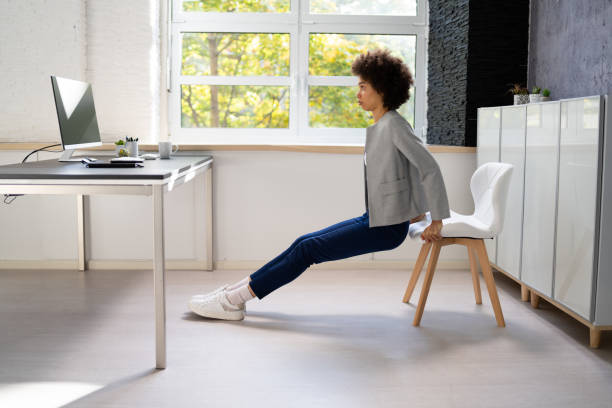
Standing breaks that counter long sitting without needing gym space.
If something feels hard, we simplify it: if balance is uncertain, perform calf raises seated or use a wall for single-leg support. Comfort and stability come before repetition count.
The simplest tools — often the most sustainable.
Walk at a pace where speaking full sentences is easy but slightly energising. Research on light activity suggests regular walking breaks may support glucose regulation after meals when done at conversational intensity.
One to three flights at steady pace, using handrail if needed. May elevate heart rate modestly — useful mid-afternoon when alertness dips. Skip if knees feel unstable that day.

Choose five exercises from this guide during your consultation. We note dosage (reps, time, frequency) and pair each with a daily anchor — after coffee, before stand-up, after school pickup.
See the Six-Week Plan Ask a QuestionService notice: We offer lifestyle movement consultations only — not medical or therapeutic treatment. Fees are confirmed in writing before you pay. Individual results vary. About our business · Terms · Privacy